


006 Seaside Residence
Type
Program
Location
Year
Area
Client
Residential
Renovation + Ground Up Addition + Furnishings
Malibu, California
Concept 2022
6,500 sqft
Private
Our clients were looking to expand their home to include a new movie room, flex space and additional bedroom suites in addition to renovating their existing home. Perched along the coastline overlooking the Pacific Ocean, the project begins with a singular gesture: the extrusion of a new vertical volume rising from the footprint of the existing residence toward the horizon. Conceived as a lantern-like tower oriented toward the sea, the addition expands the spatial potential of the home by elevating key living spaces upward, allowing the interior to open and stretch toward panoramic ocean views and shifting coastal light.
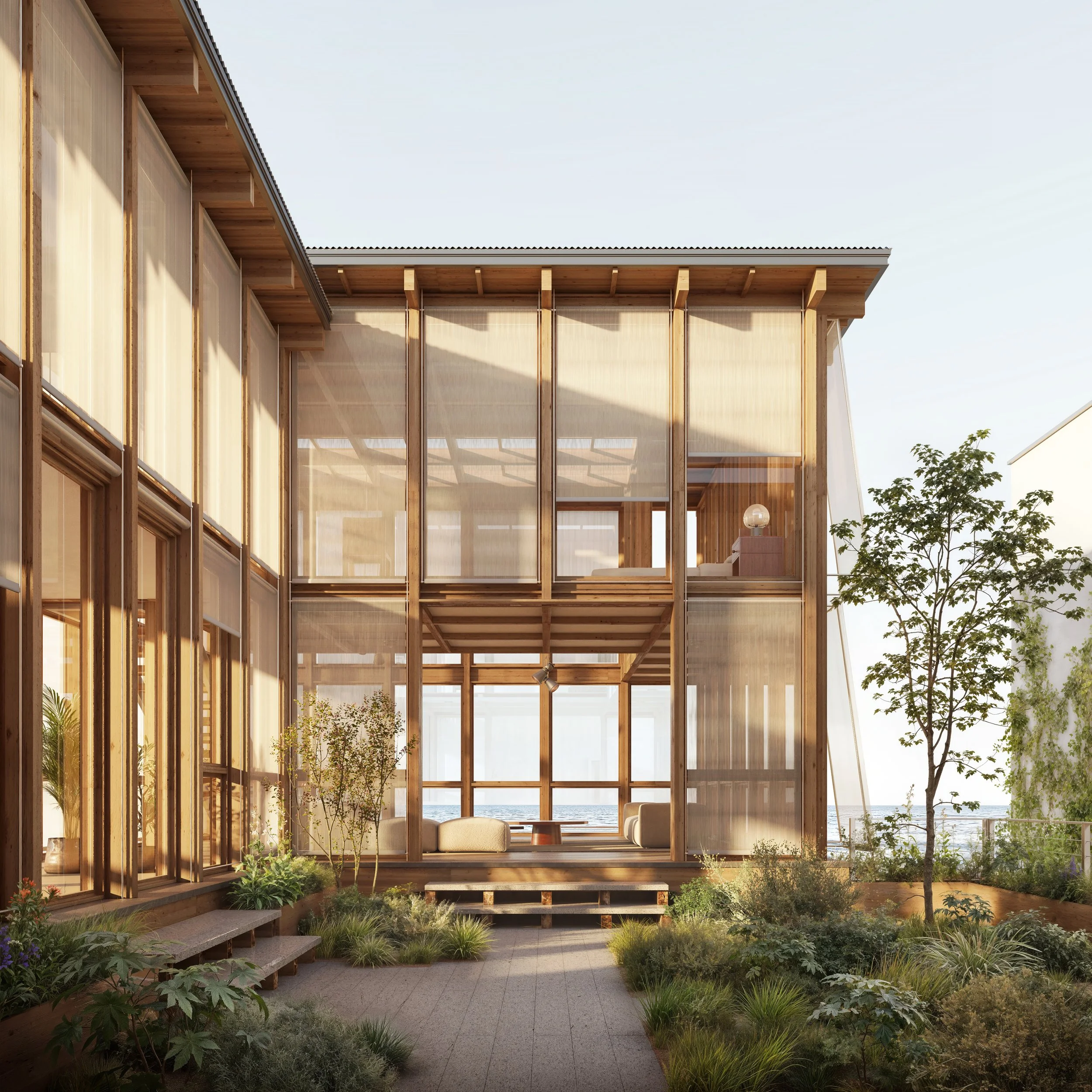
A suspended bridge volume connects the new tower to the existing architecture, establishing a dialogue between old and new, land and sea, permanence and transformation. Together, the original northern structure and the newly introduced southern tower frame a series of layered spatial experiences that unfold vertically and across the site, constructing a sequence toward the horizon.
Throughout the house, a sequence of gardens is woven into the architecture, introducing moments of pause, reflection, and filtered light. These planted voids create unexpected sightlines between spaces while softening the transition between interior and exterior, structure and landscape.
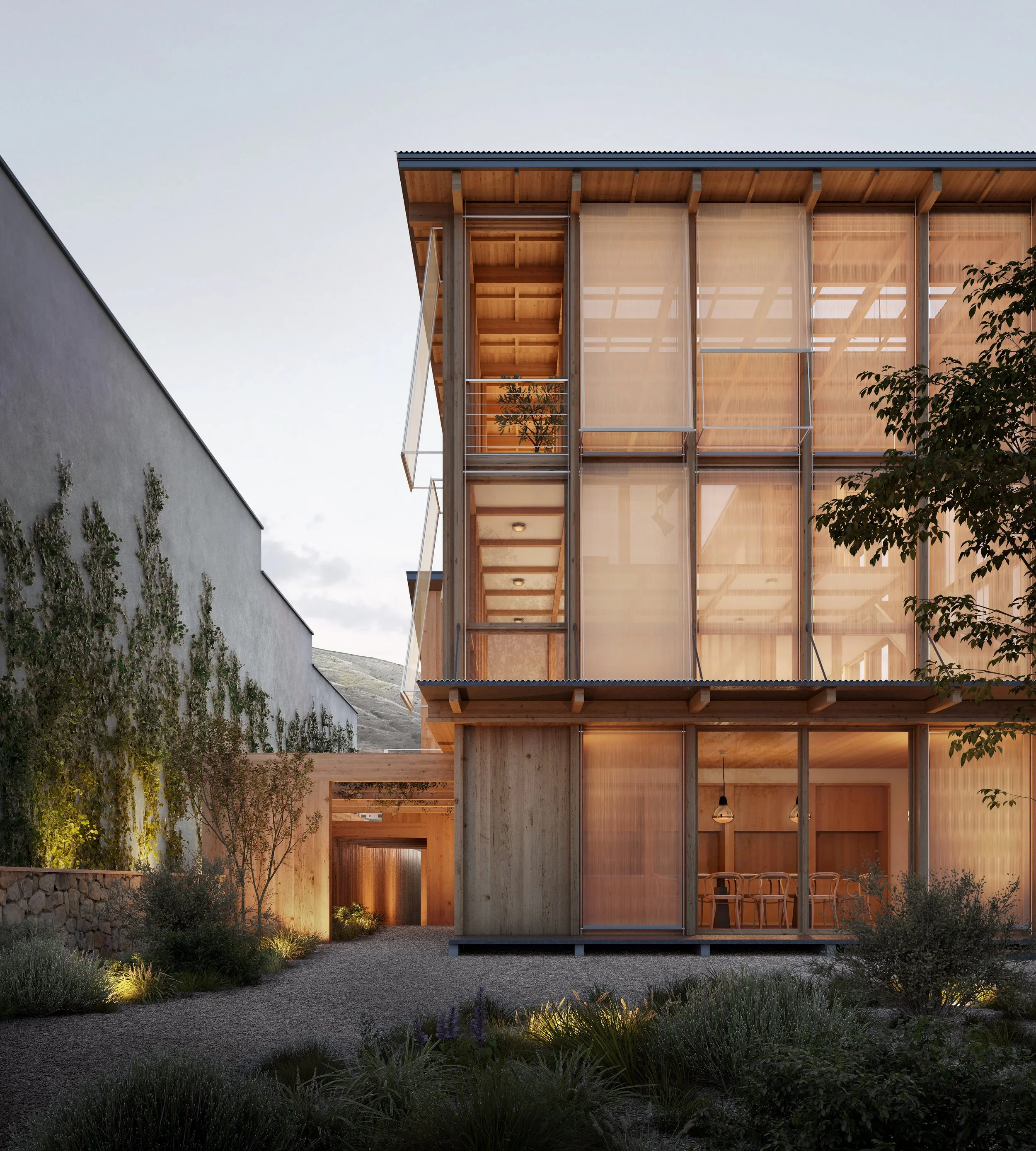
Central to the project is the introduction of a layered veil system composed of operable linen screens suspended beyond the primary glazing line. Rather than functioning as conventional shading devices, the veils create a constantly shifting atmospheric threshold between the interior and the surrounding environment. Multiple layers of translucent screens overlap across the facade, producing varying degrees of privacy, shadow, and transparency throughout the day. At moments, the architecture appears almost fully concealed behind a soft luminous scrim; at others, the structure, circulation, and life within become visible through the layered facade.
The operability of the screens allows the building to continuously recalibrate itself in response to climate, occupation, and light. As the veils open, stack, pivot, and overlap, the architecture takes on a cinematic quality, editing views outward toward the ocean while filtering views inward from neighboring properties. The facade becomes less a static enclosure and more an environmental instrument, capable of producing constantly evolving atmospheric conditions.
Materially, the project embraces contrast as a way of expressing time. The original architecture is elevated through the introduction of natural wood siding intended to weather and deepen with age, reinforcing the history and character of the existing structure. In contrast, the new addition is articulated through a lighter palette of timber, glass, linen screens, and metal, forming an atmospheric and environmentally responsive framework that shifts with light, climate, and occupation.
Rather than concealing the distinction between past and present, the project emphasizes it. The line between existing and new remains visible and intentional, allowing the architecture itself to register the passage of time through material, atmosphere, and form.