
008 Westside Residence
Type
Program
Location
Year
Area
Client
Photography
Styling
Press
Residential
Interior Renovation + Furnishings
Los Angeles, California
Complete
3,250 sqft
Tom Quinn + Celeste Wright
William Jess Laird
Austin Whittle
Architectural Digest
Set within the a neighborhood of West Los Angeles, this project reinterprets the modest bungalow tradition that defined much of Post-War Los Angeles. Built on an expanded double lot, the home sits within a community once known for its prefabricated, middle-class dwellings and, most notably, for the 52 tract houses designed in 1948 by architect Gregory Ain and landscape designer Garrett Eckbo, an early experiment in modern living.
The clients, Tom Quinn, founder and CEO of NEON Rated, the acclaimed American independent film production and distribution company and his wife, Celeste Wright, relocated from Brooklyn to Los Angeles. For the first time, they sought a home that could function as both sanctuary and stage for gathering. In contrast to New York’s street-driven identity, Los Angeles offers its residents the opportunity to project identity inward, transforming the private home into a public domain.
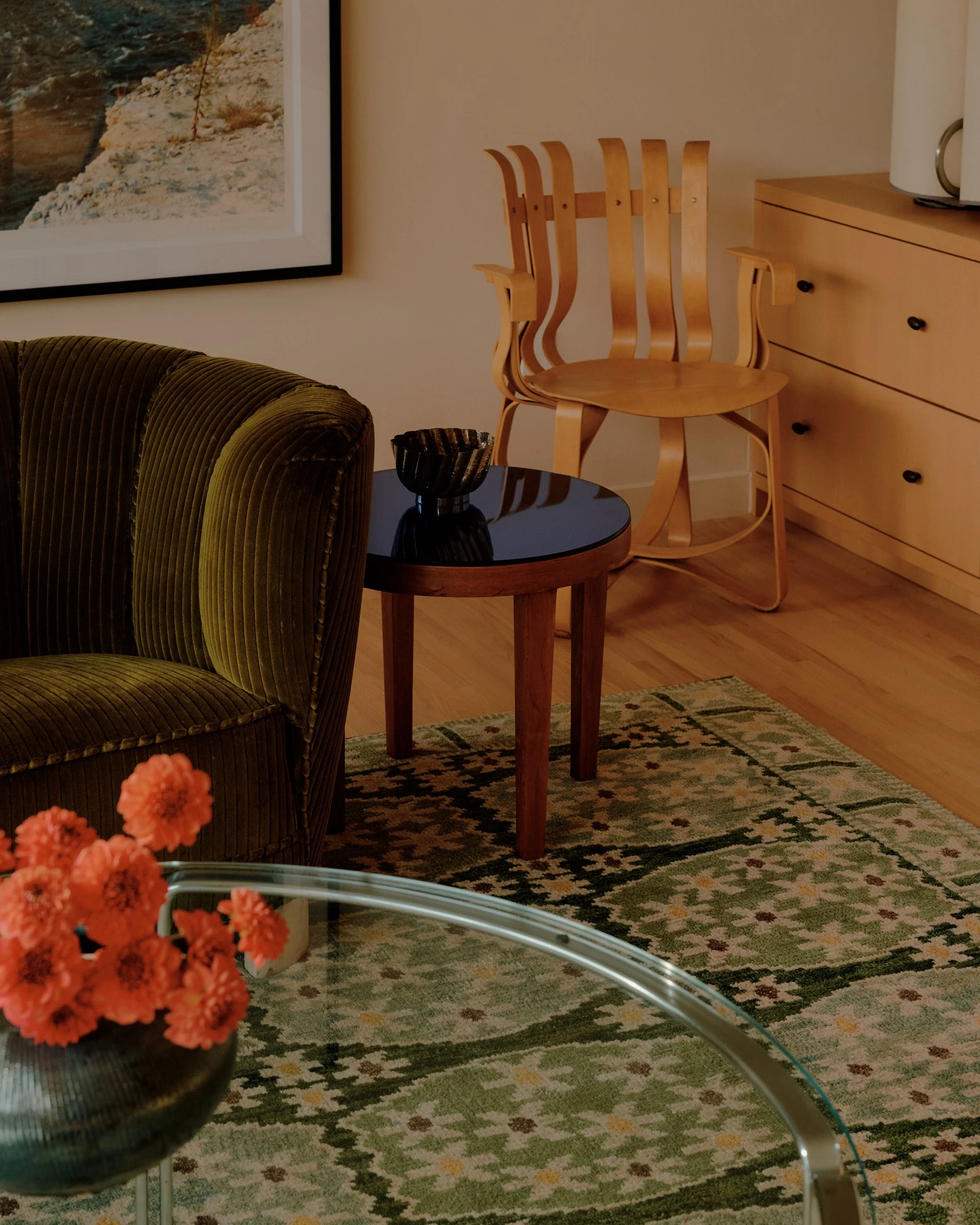
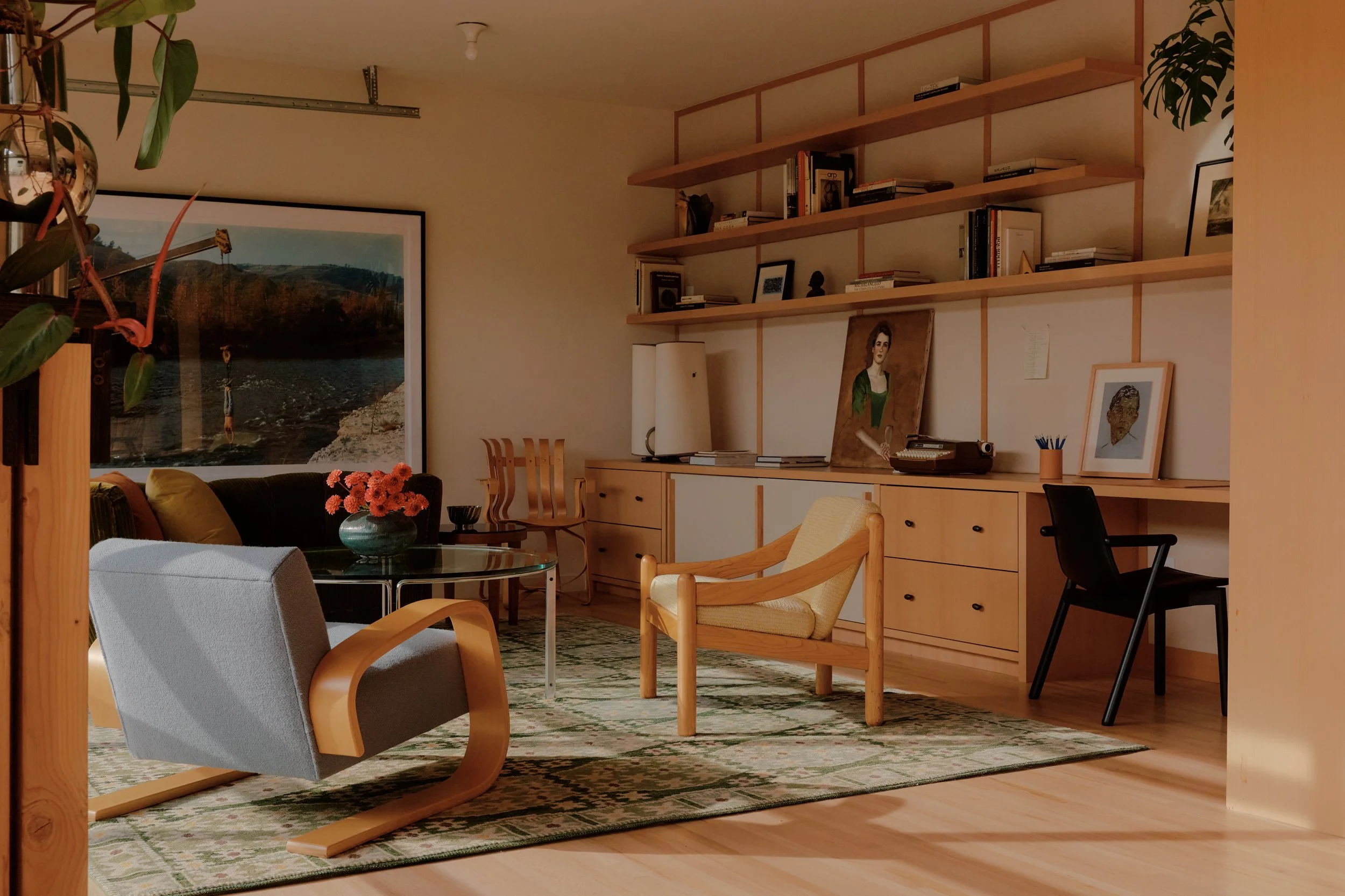
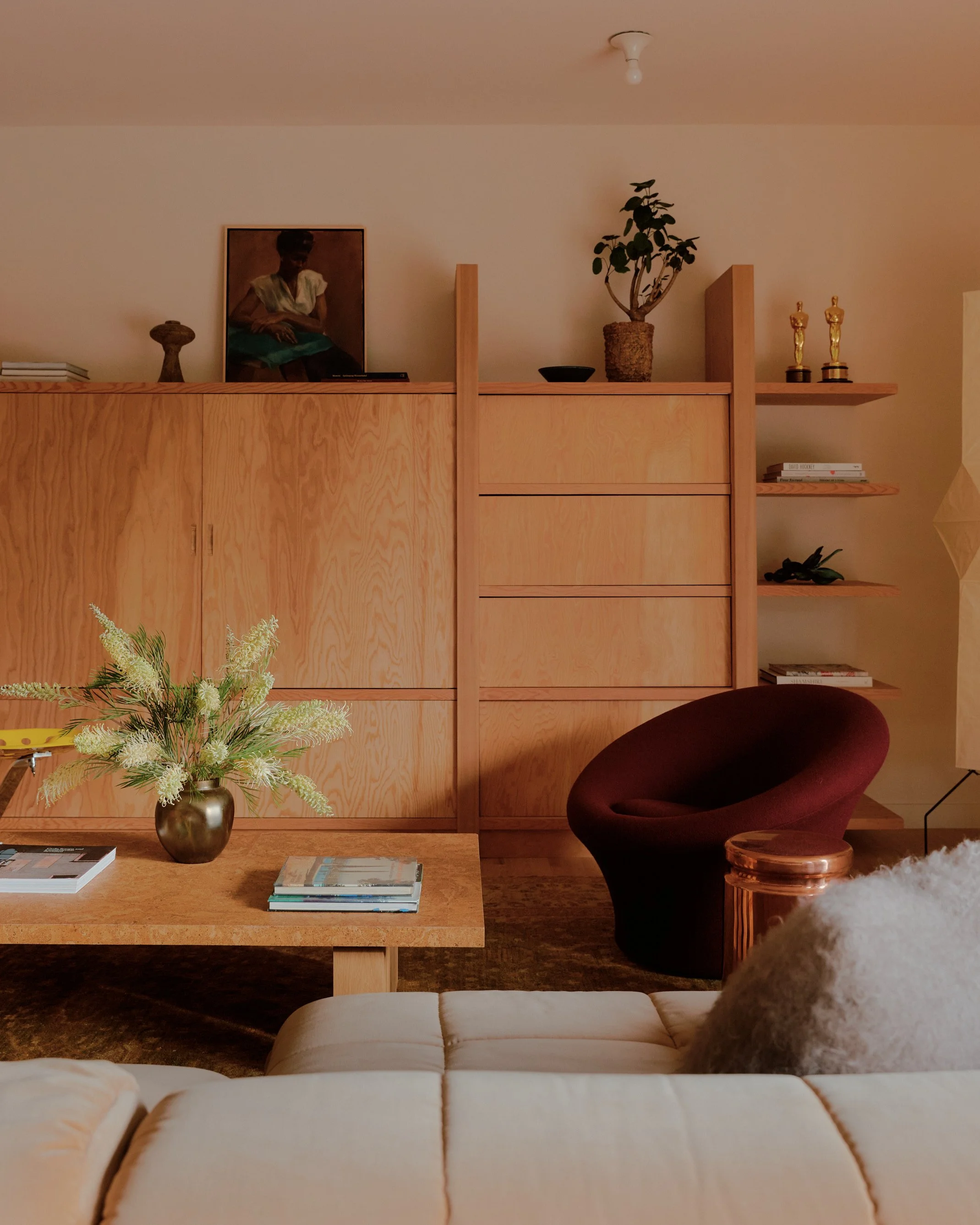
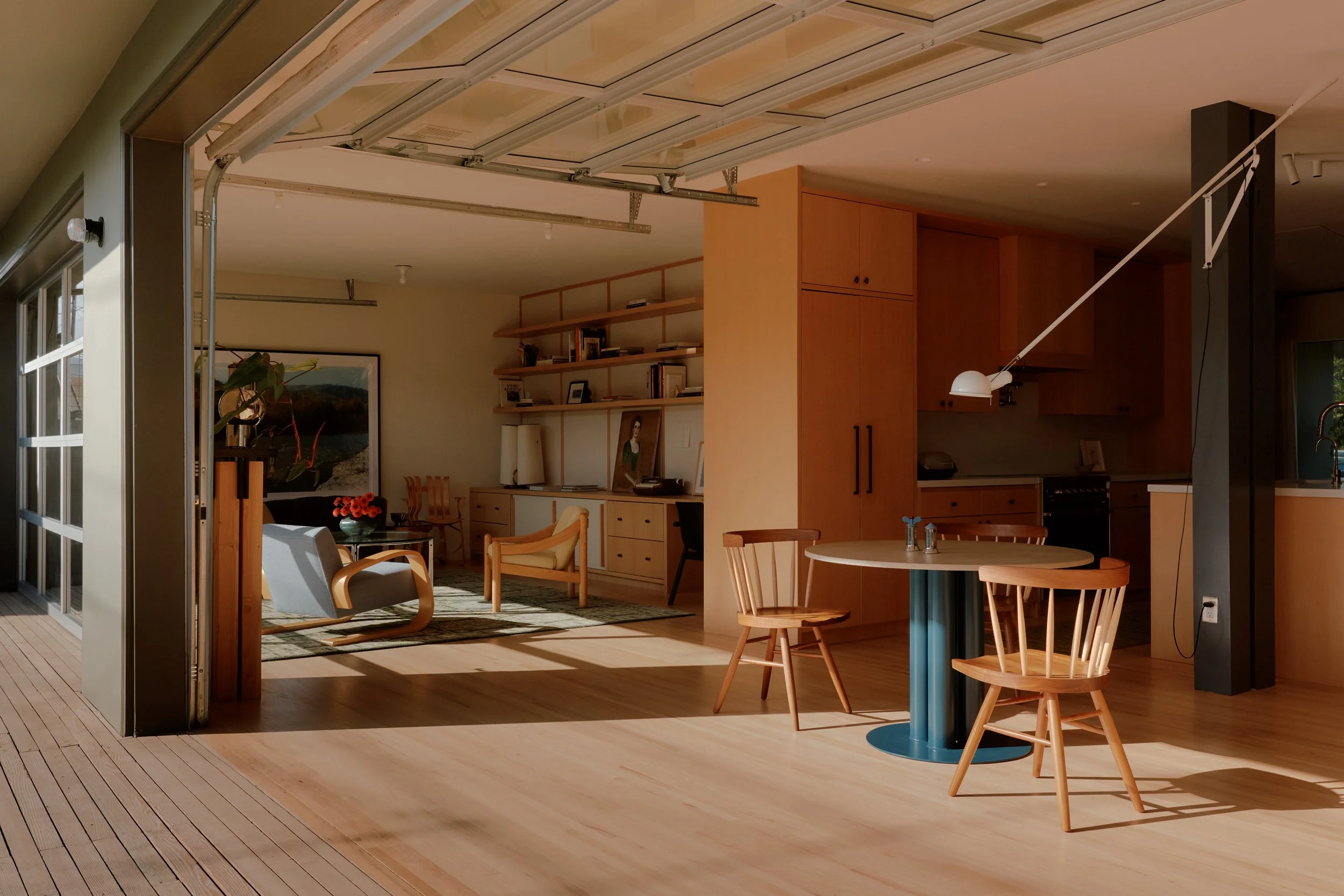
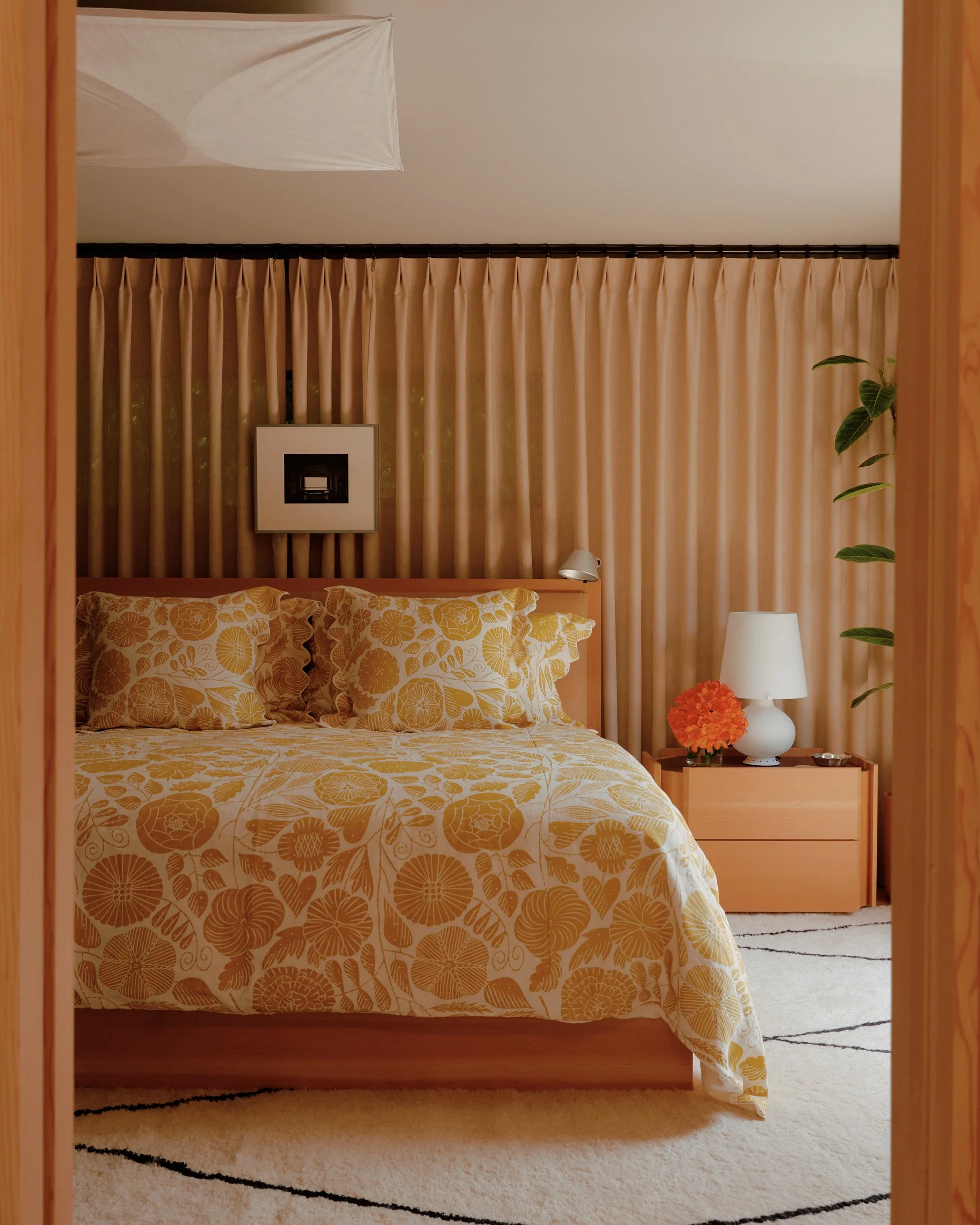
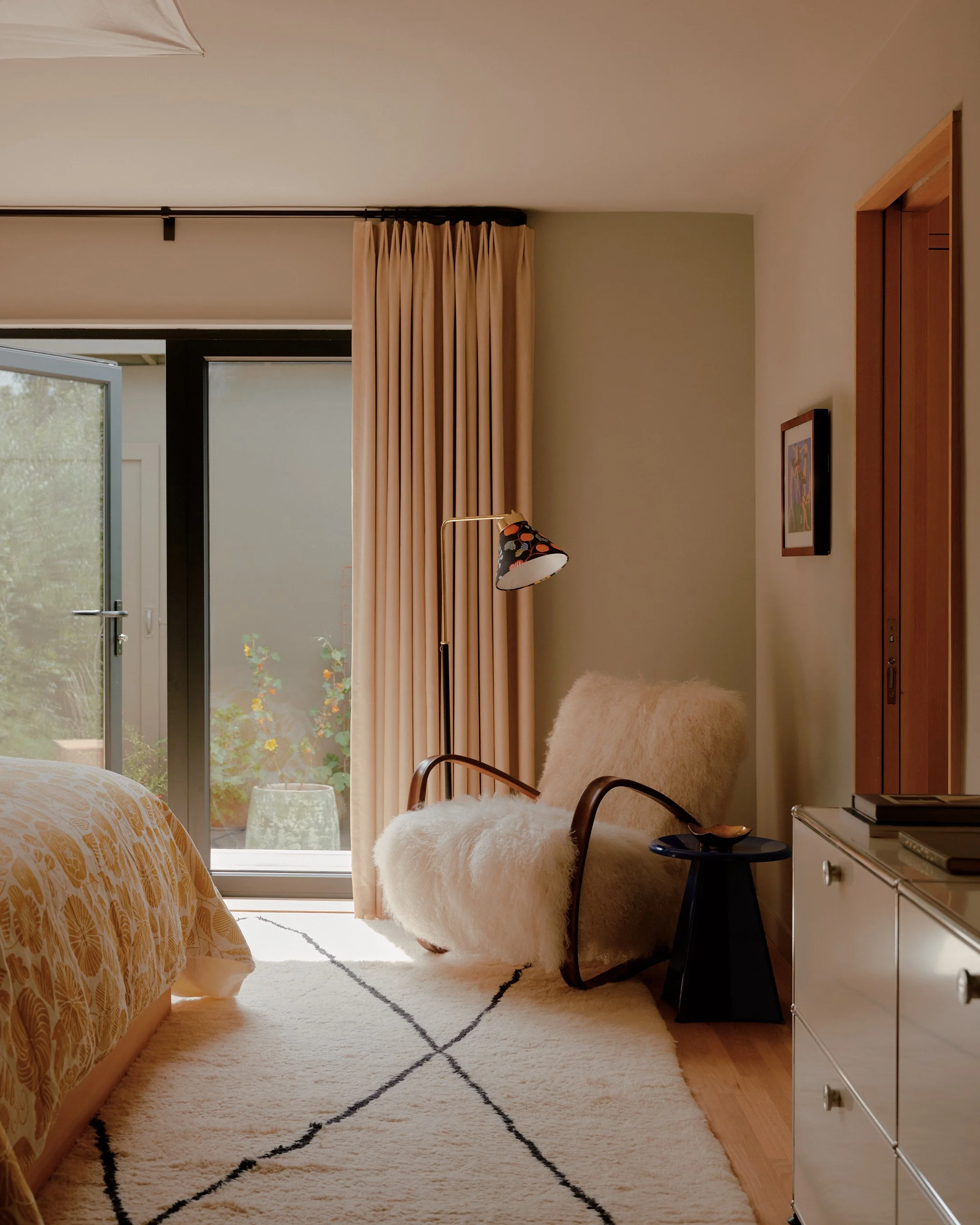
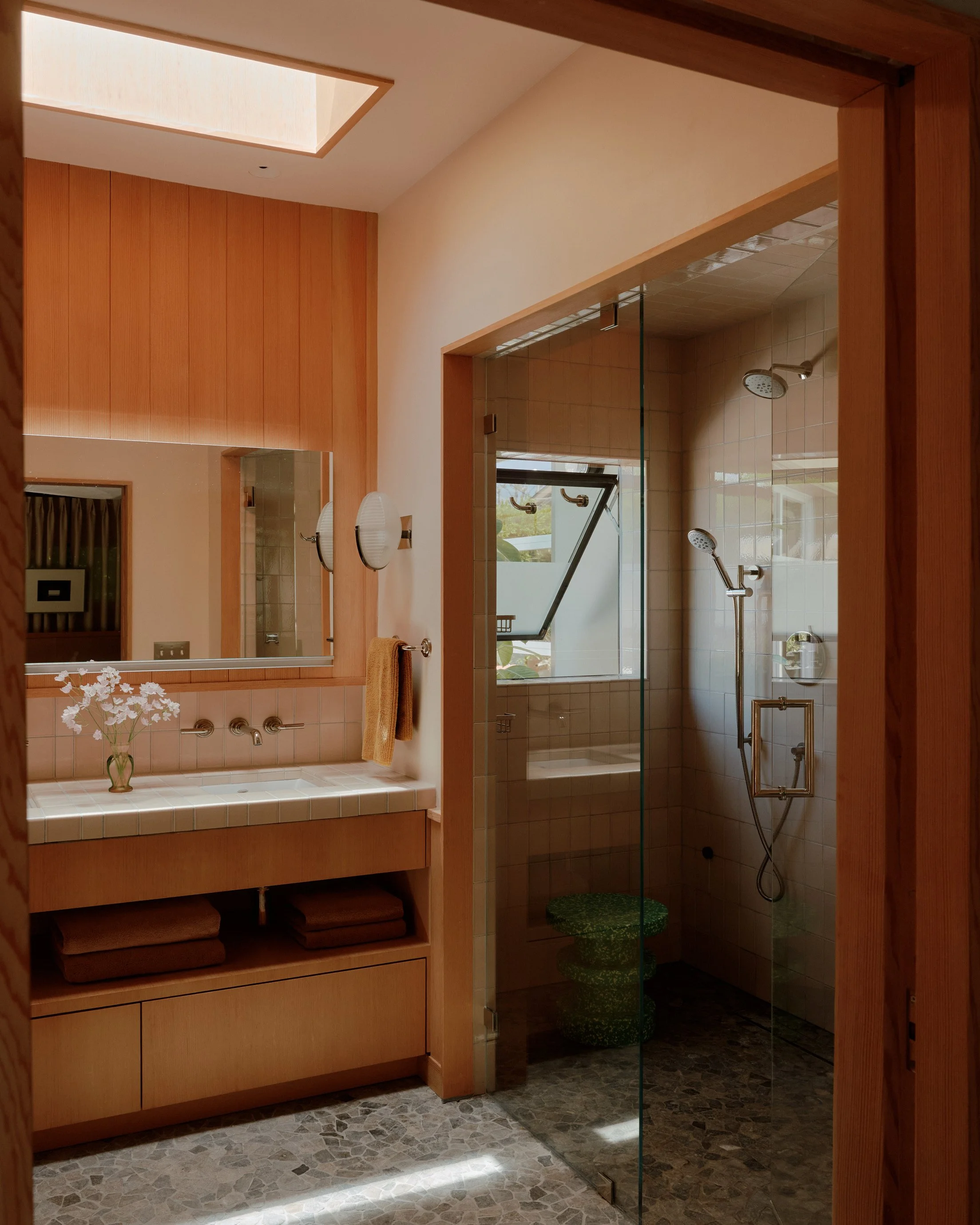
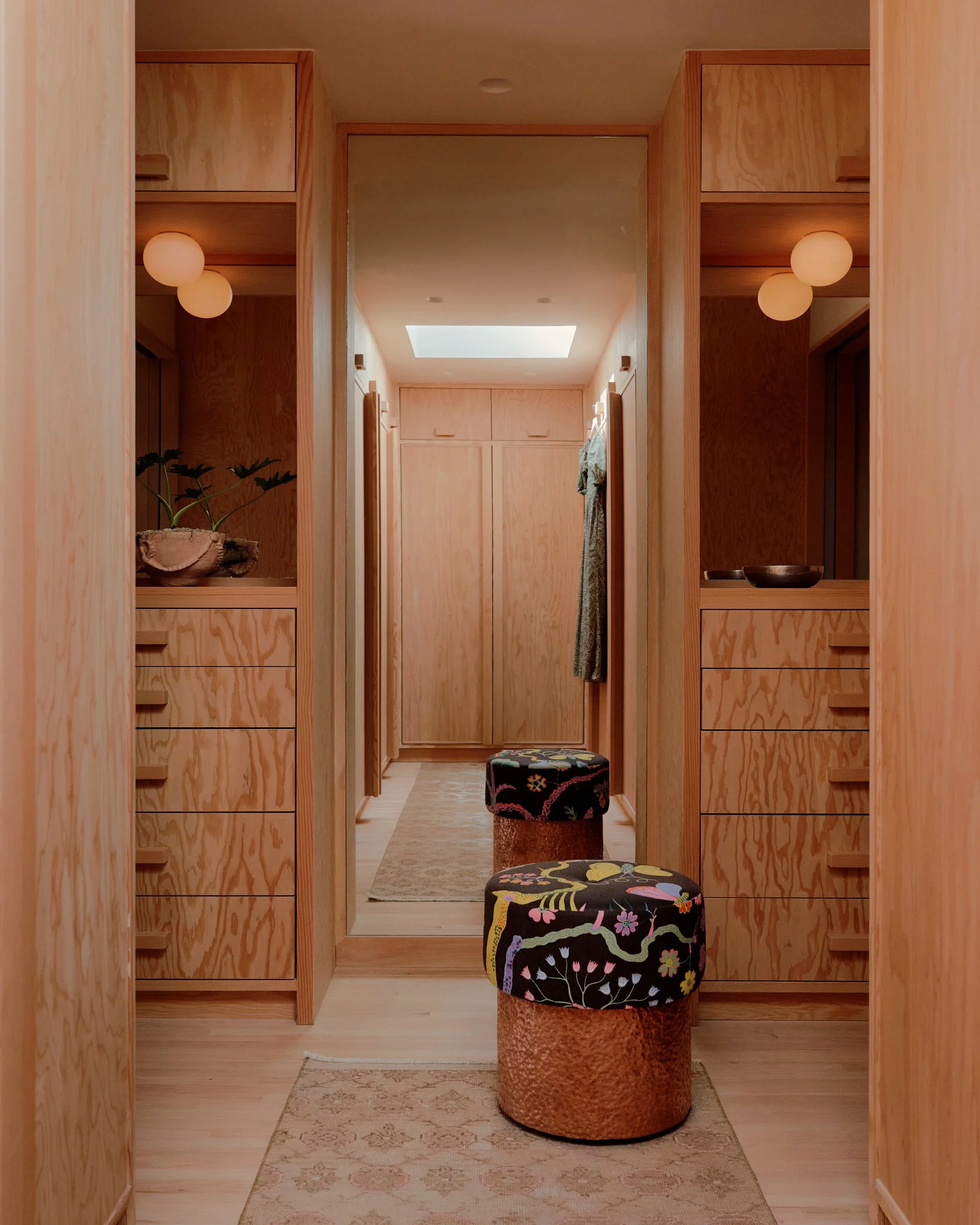
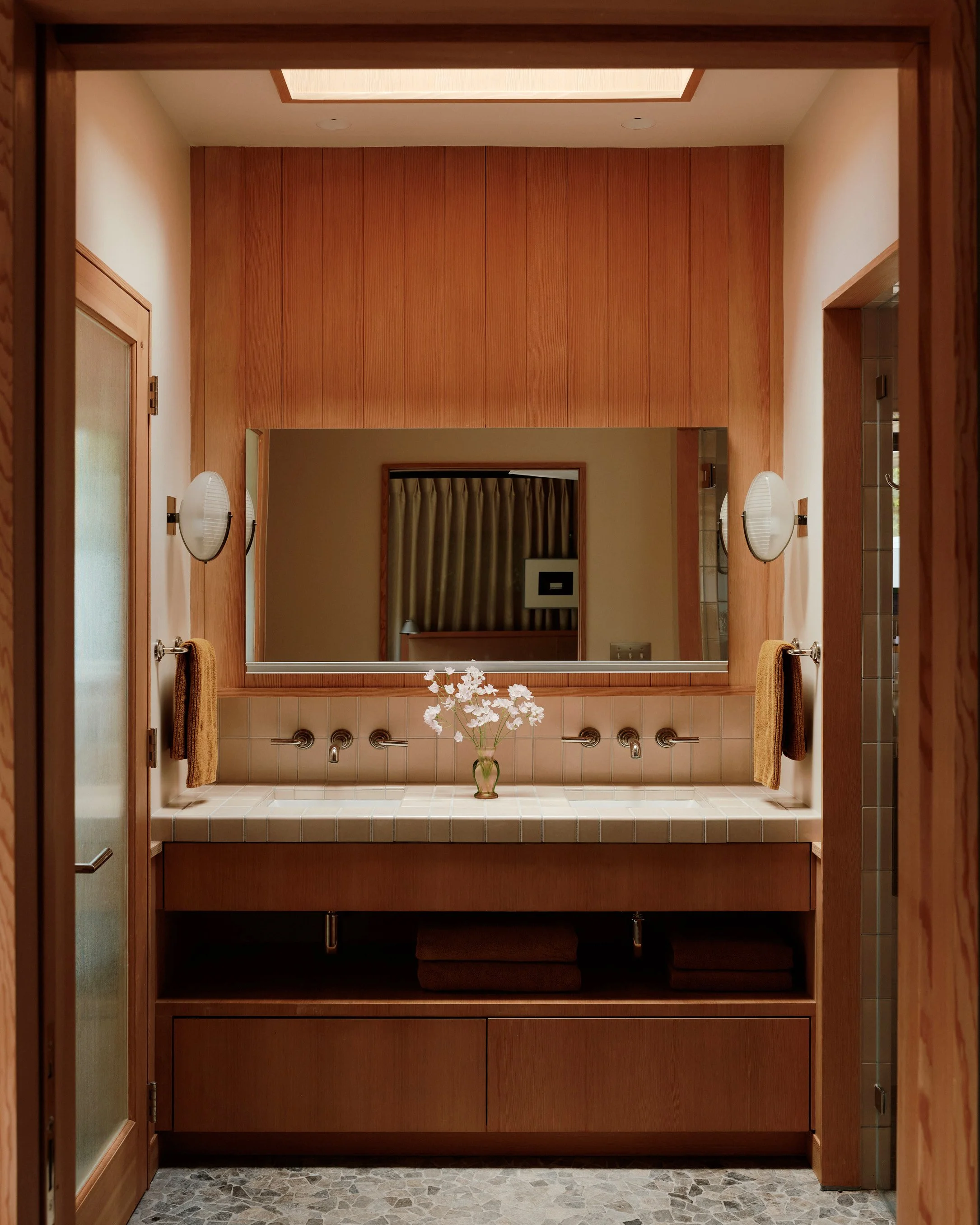
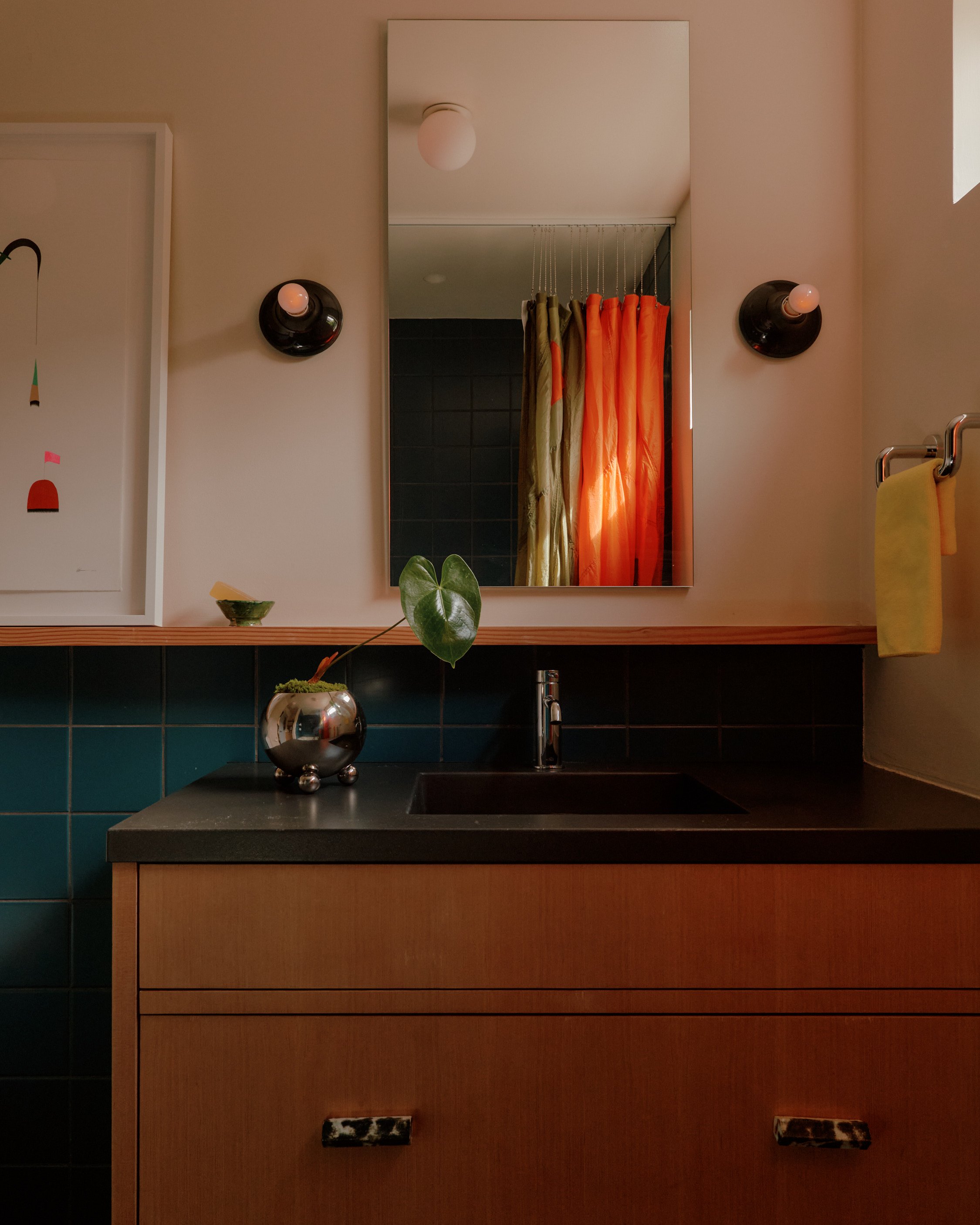
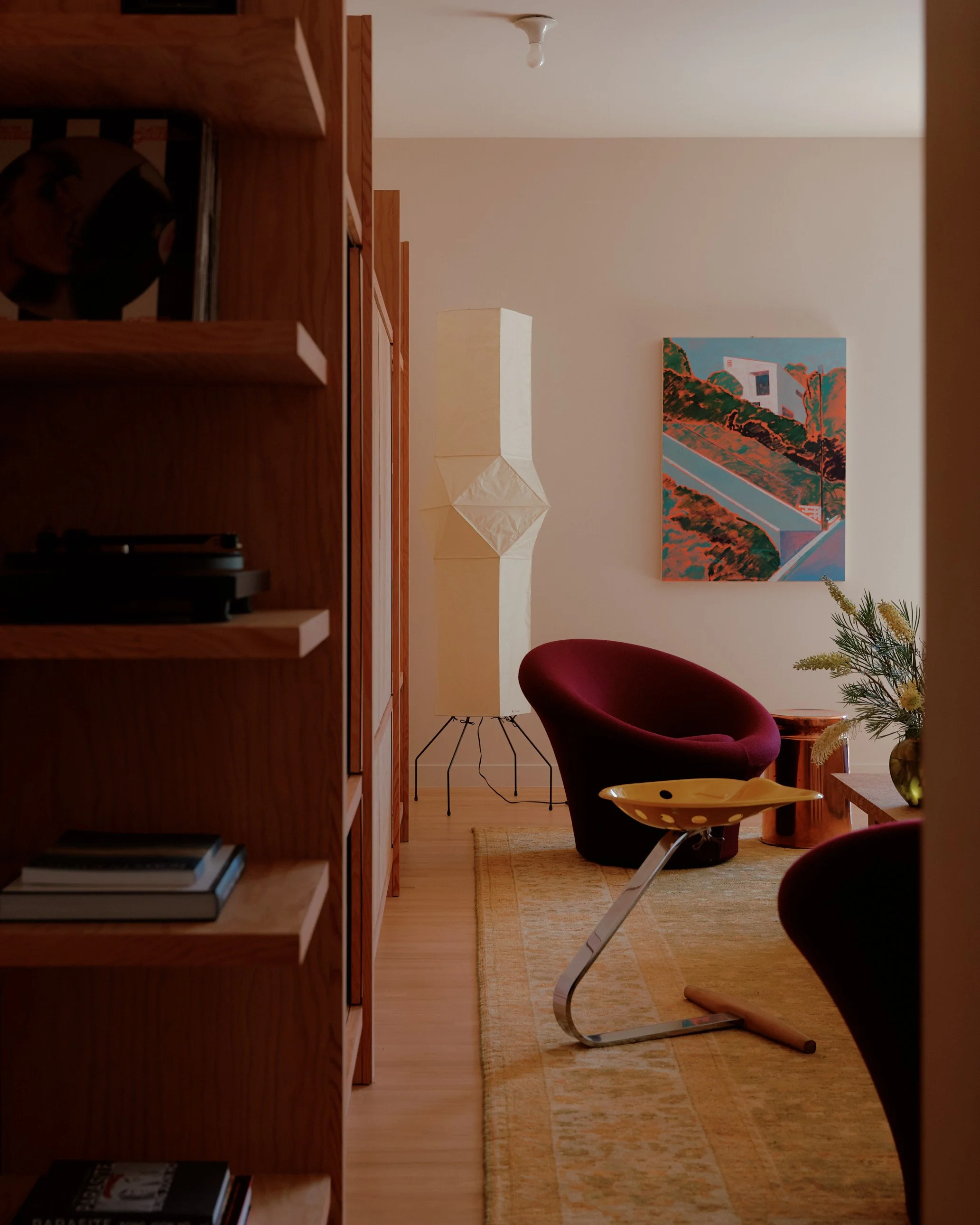
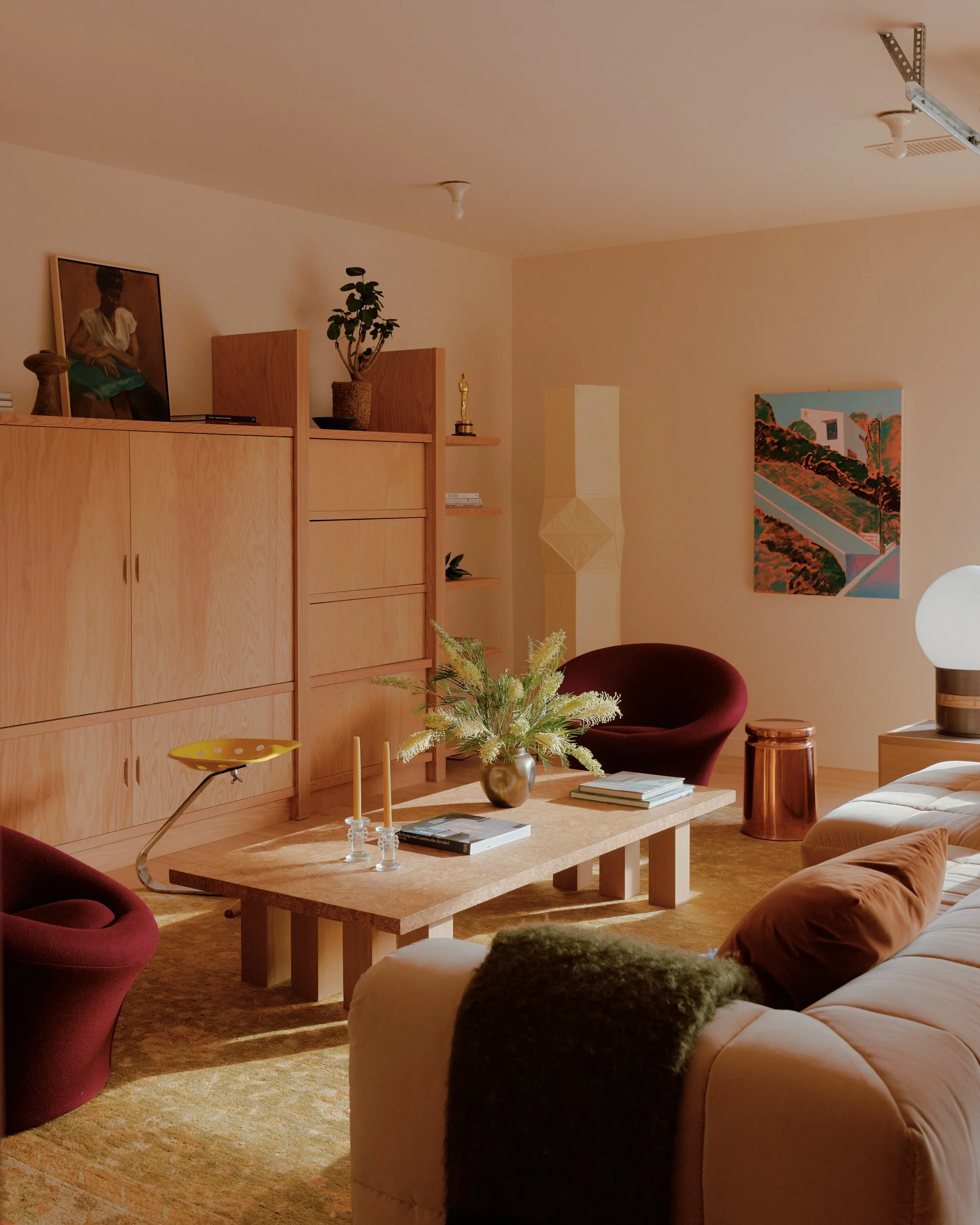
Our intervention embraced the site’s unassuming architectural DNA. By amplifying humble, cost-effective materials, particularly Douglas Fir plywood, we elevated the everyday into the exceptional. Entire systems, from a large-scale custom entertainment unit to a spacious primary walk-in closet, were fabricated from plywood with solid wood detailing. The result is a home that honors the modest legacy of Mar Vista while crafting a refined, contemporary environment for family, creativity, and community.
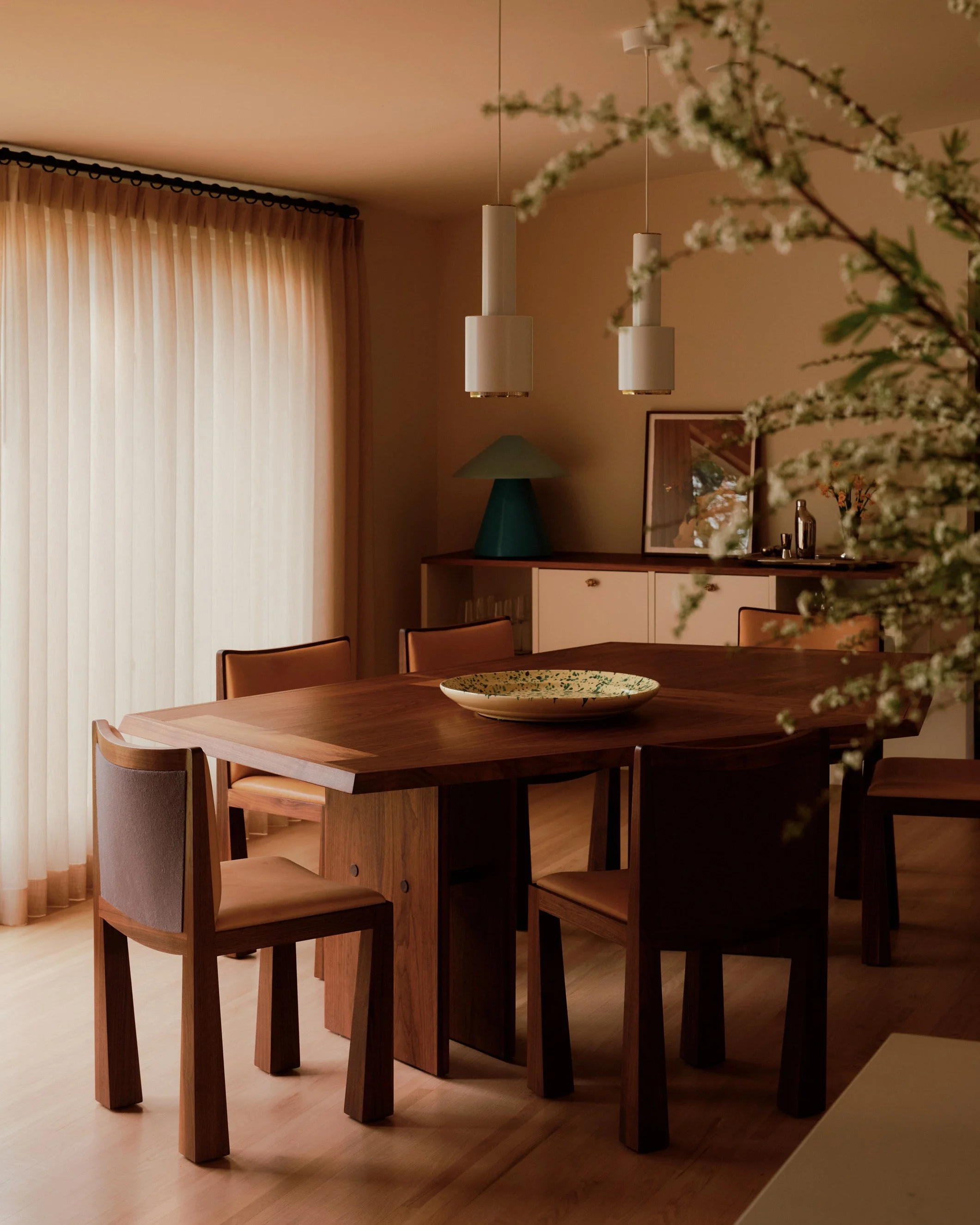
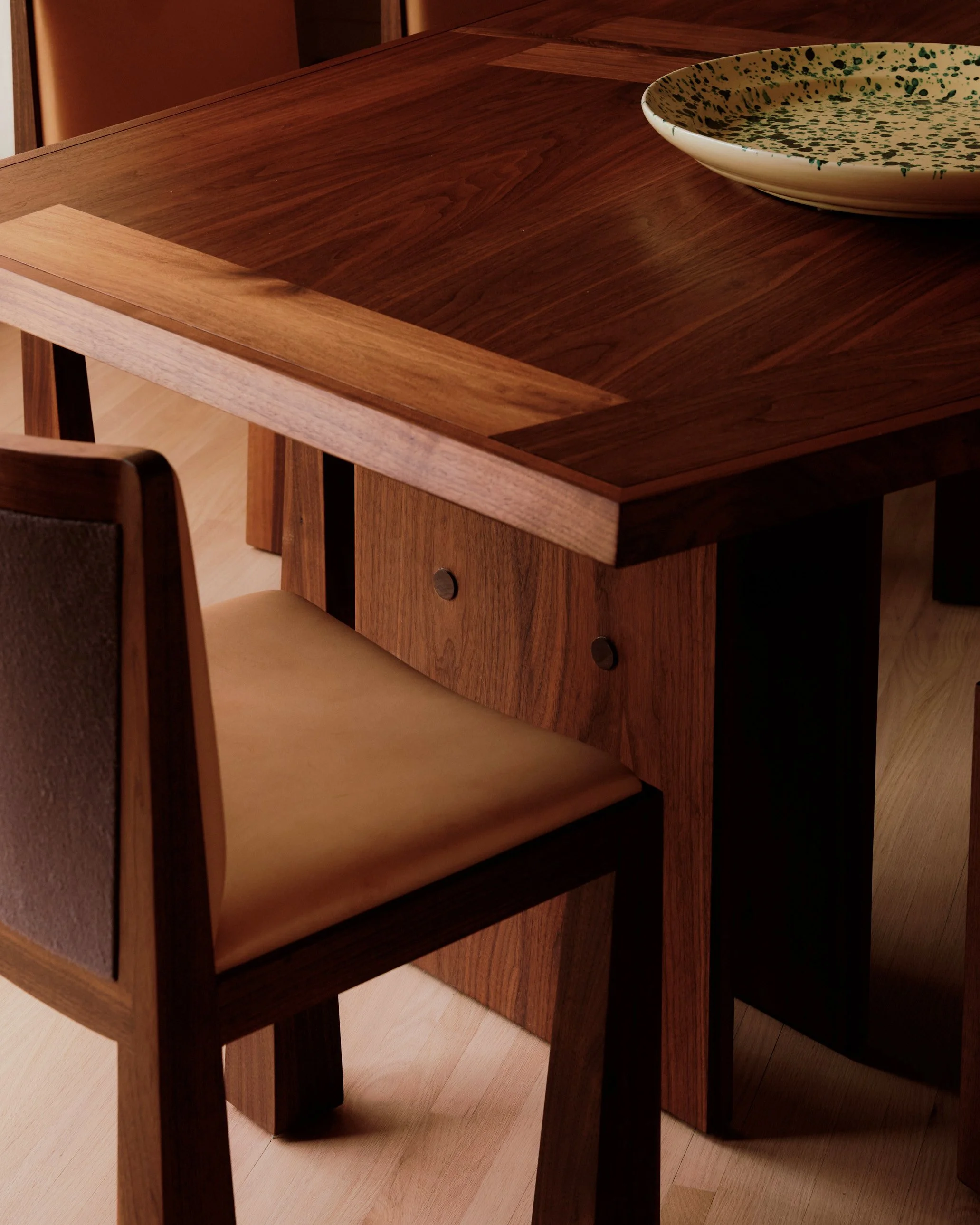
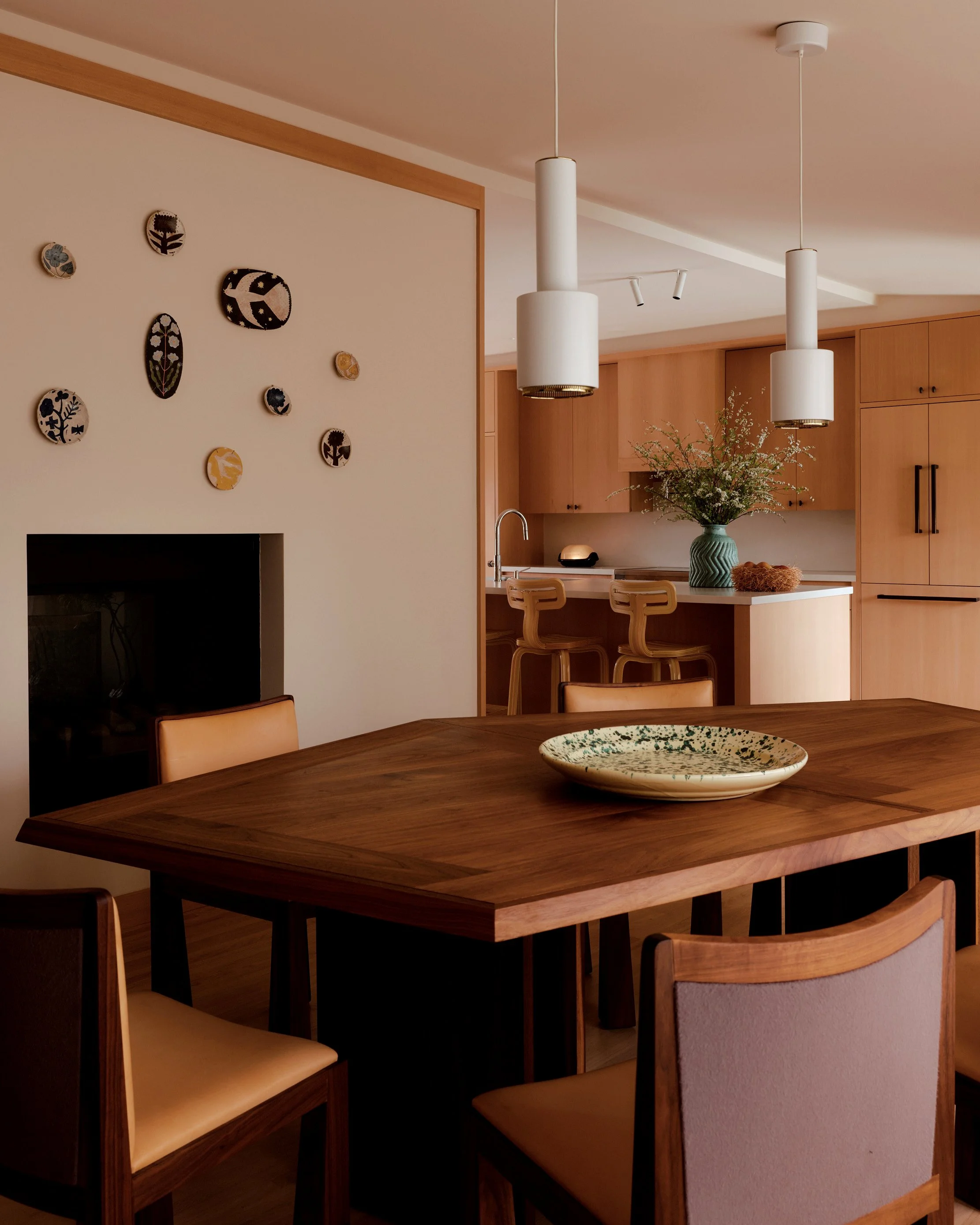
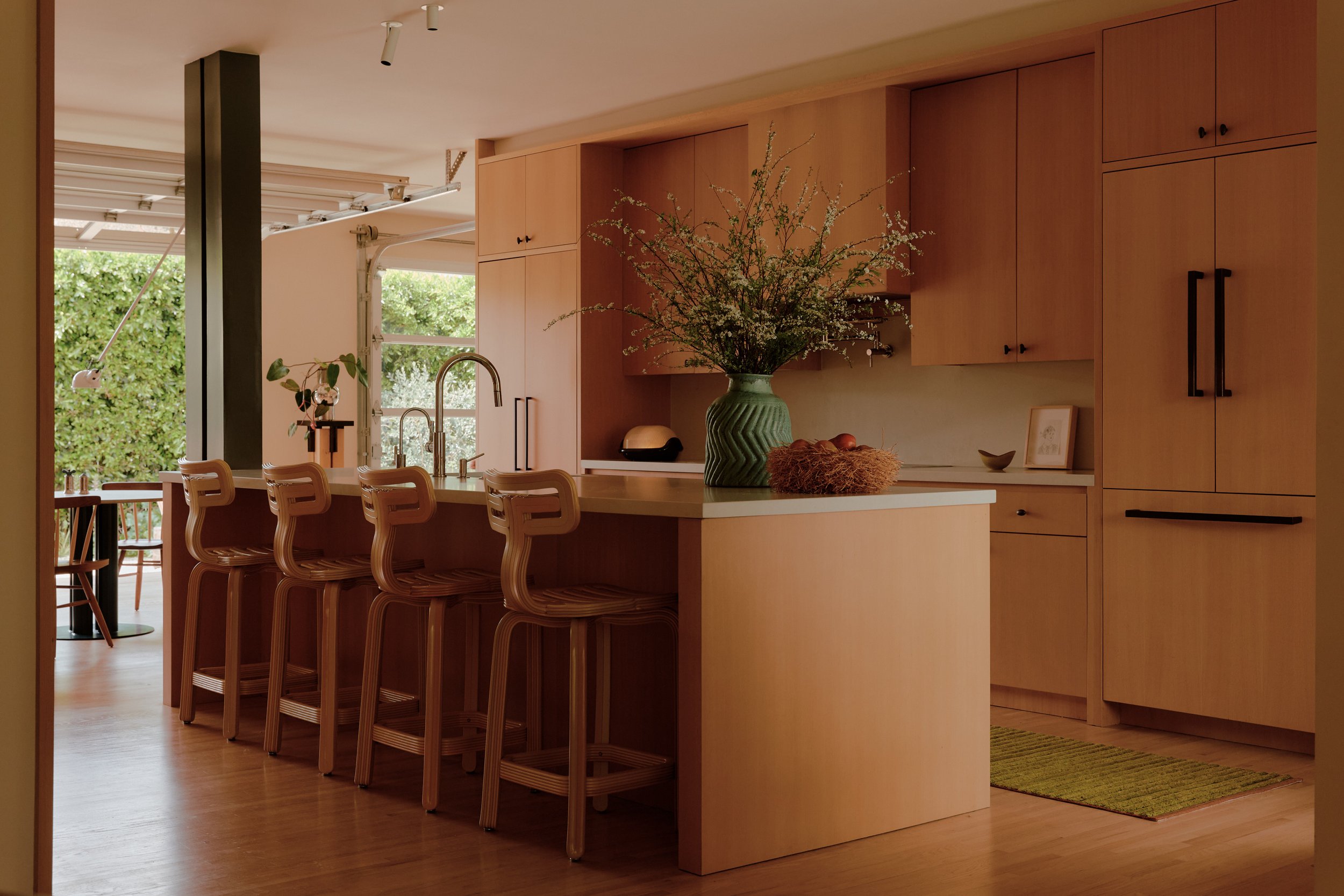
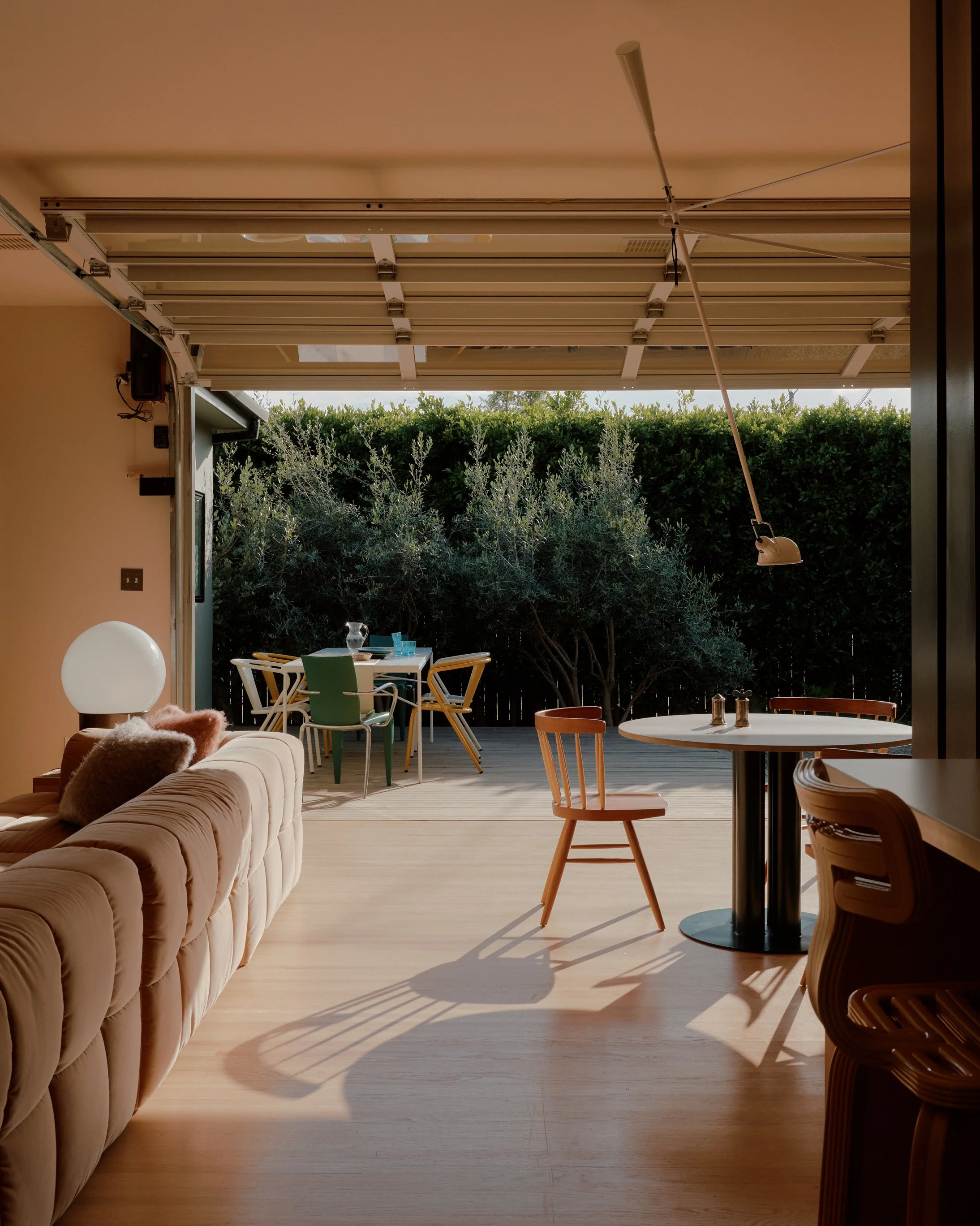
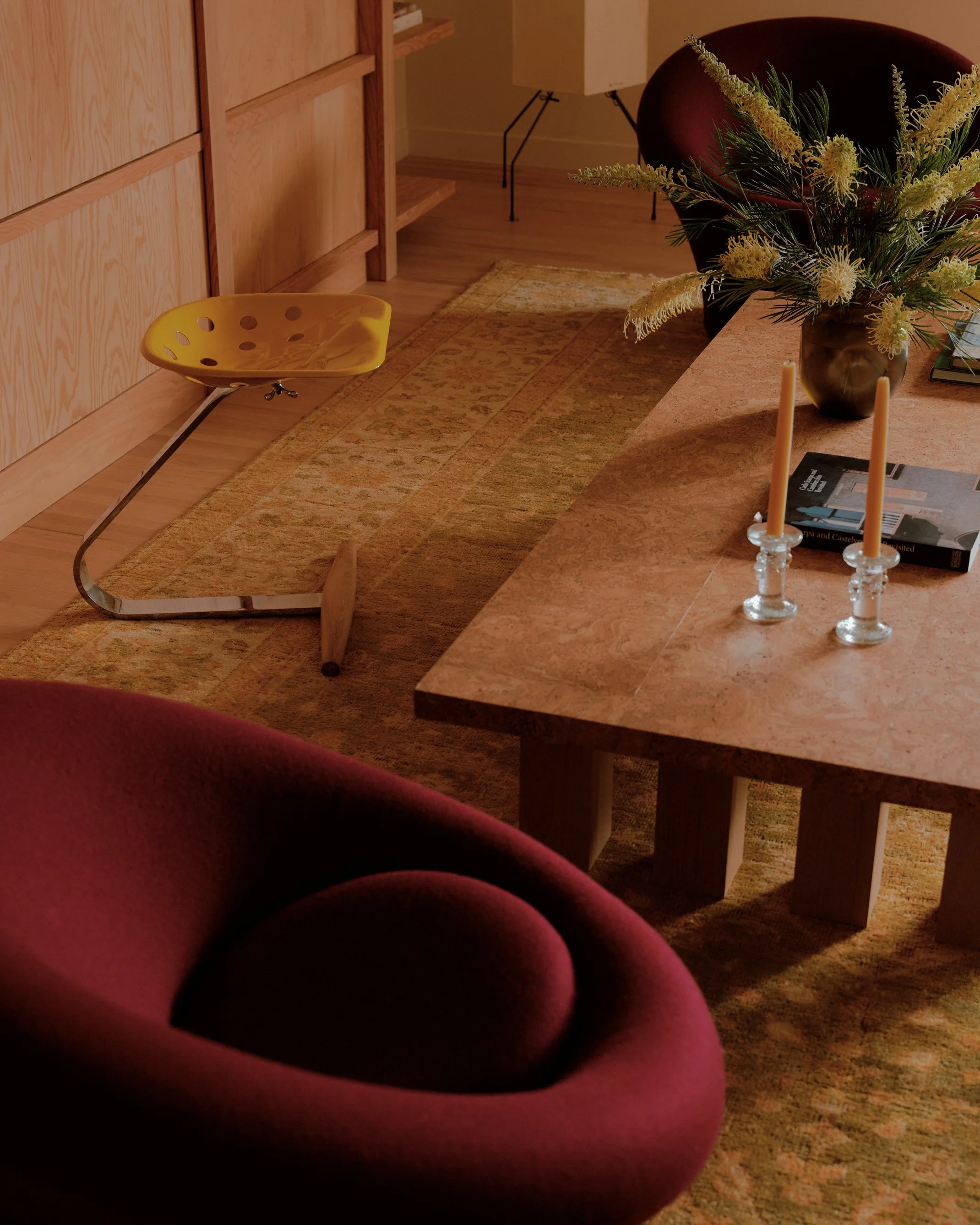
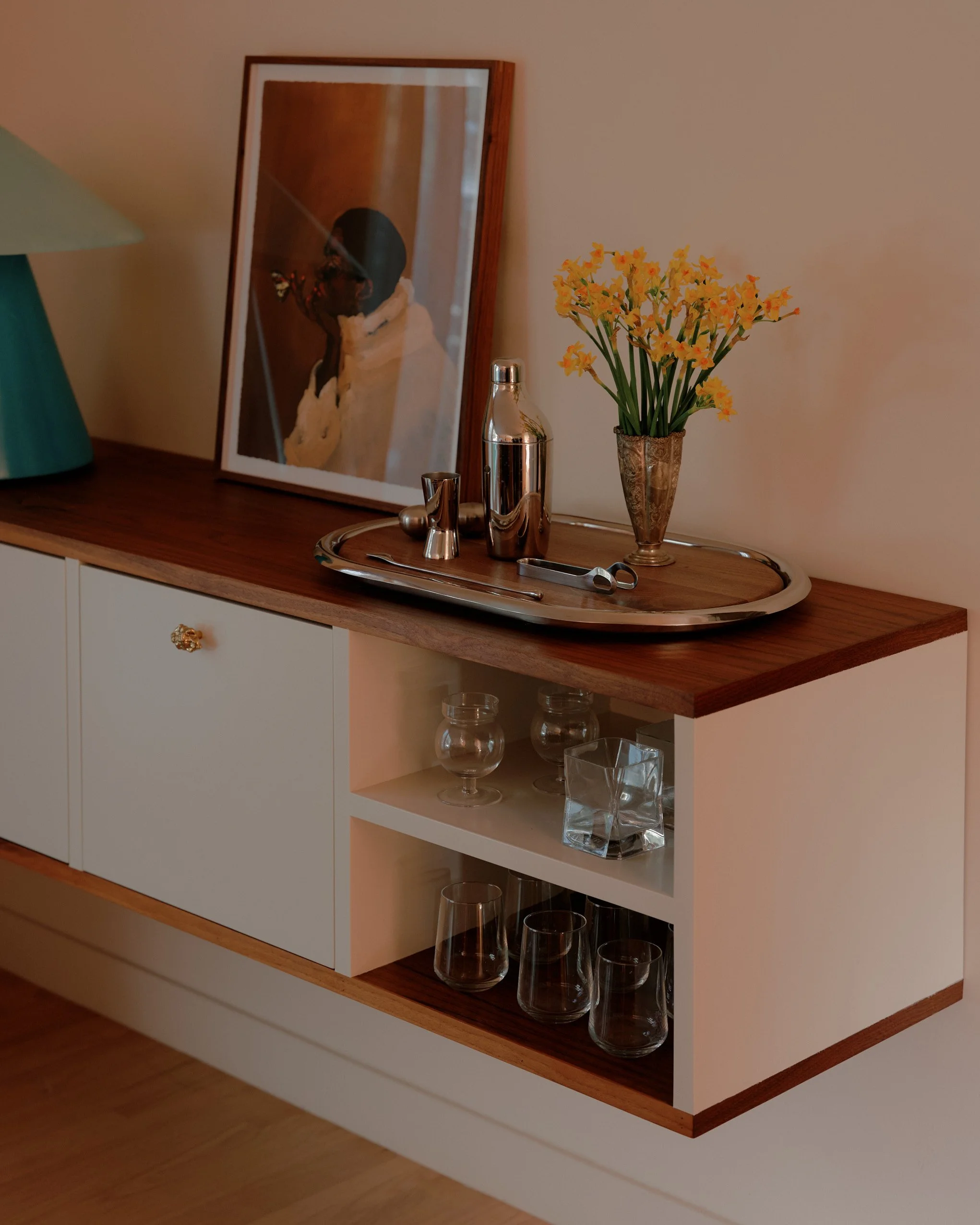
At its core, this home was conceived as a platform for expression and entertainment. The dining area becomes a stage in itself: a custom amorphic walnut table anchors the space, paired with our Palan dining chairs and a wall-hung bespoke bar console. Overhead, Alvar Aalto’s iconic Artek “Hand Grenade” pendants cast a soft glow, lending a quiet theatricality. The adjacent kitchen continues this dialogue, clad in warm European Beech and animated by Dirk Van Der Kooij’s recycled plastic stools, an element of the design that is provocative yet practical. Across the home, each room unfolds as both surprise and progression, a rhythm that balances eclecticism with the relaxed ease of Southern California living.
The clients’ ambition was clear: to create a home that could host an ever-evolving community of creative individuals. Our design approach drew on early concept stores by Belgian fashion house Dries Van Noten, where shoppers felt as though they were stepping into an intimate residence rather than a retail space, as well as case studies from Frank Gehry and Rudolph Schindler, whose work demonstrates the power of high design realized through accessible, everyday materials. In this way, the project became a study in the tension between public and private domains in Los Angeles, exploring how a house can function simultaneously as personal sanctuary and cultural salon.
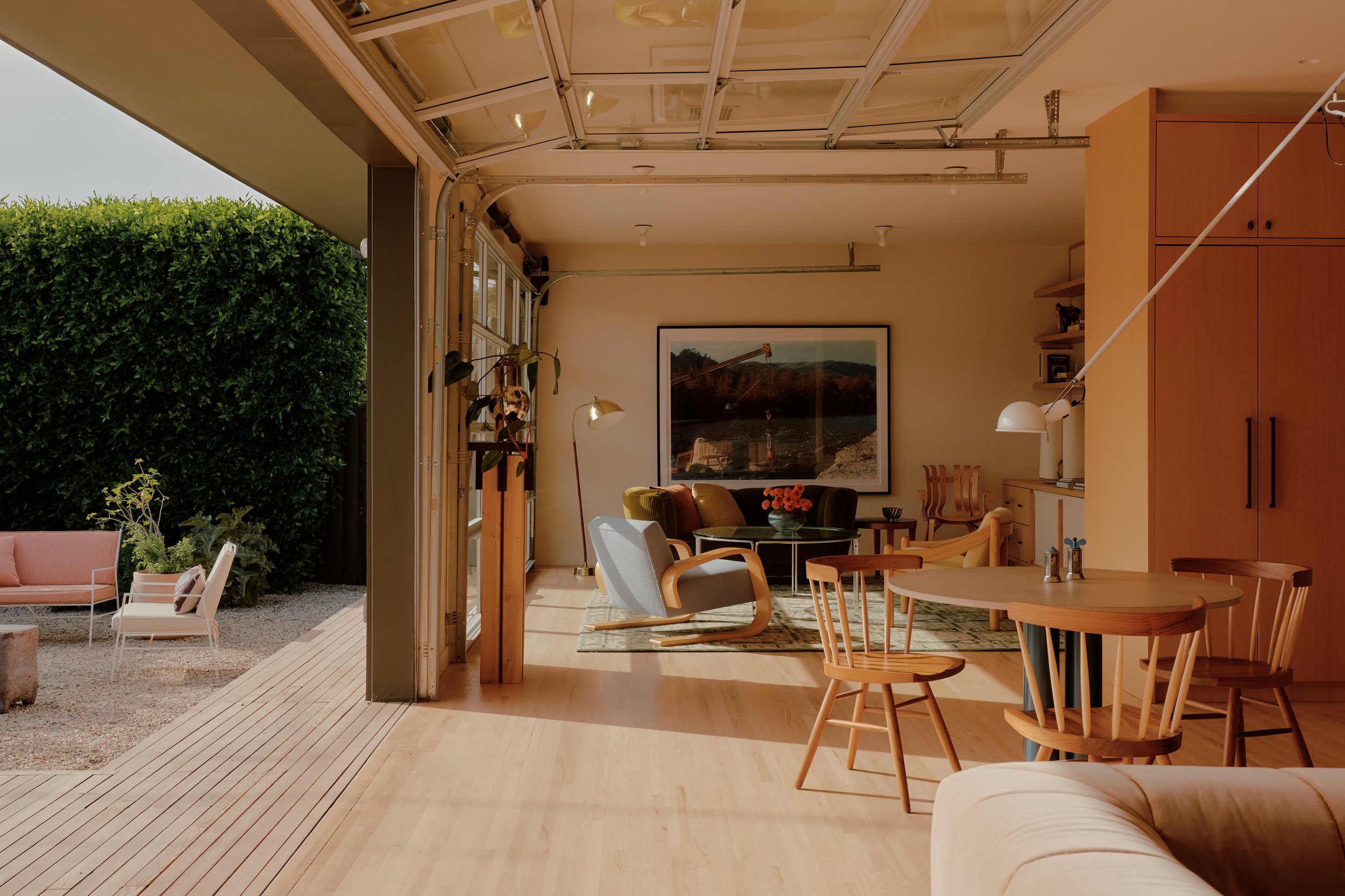
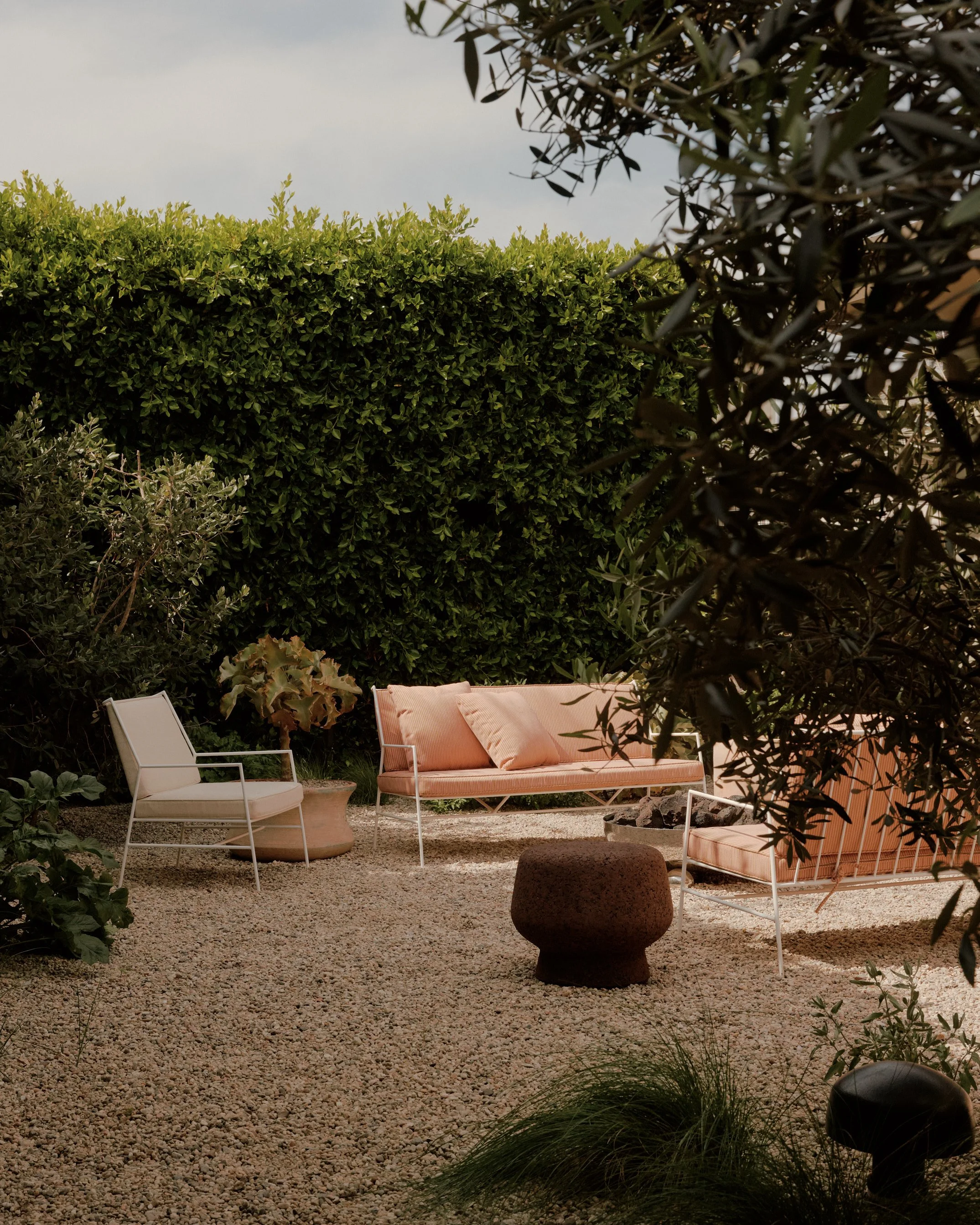
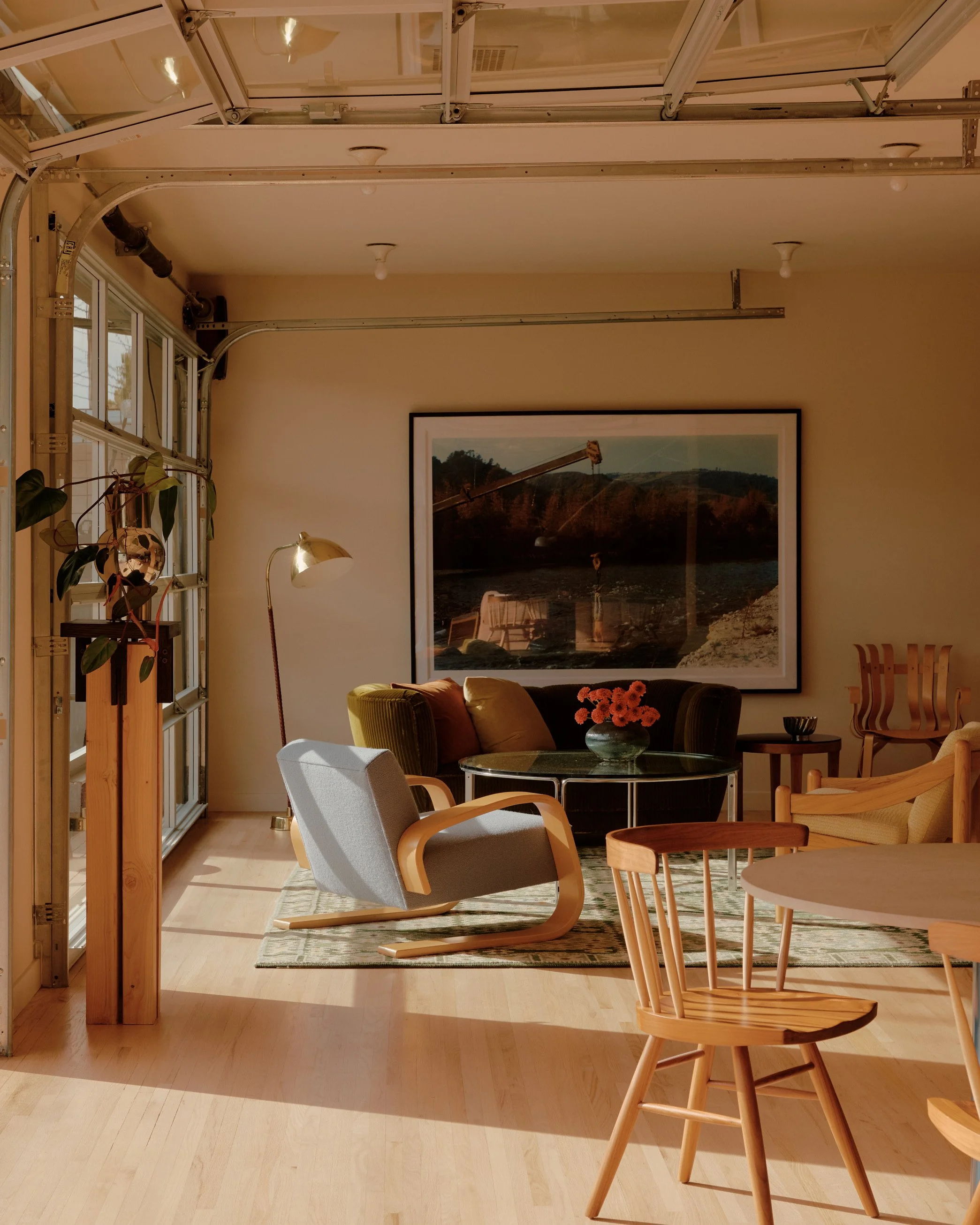
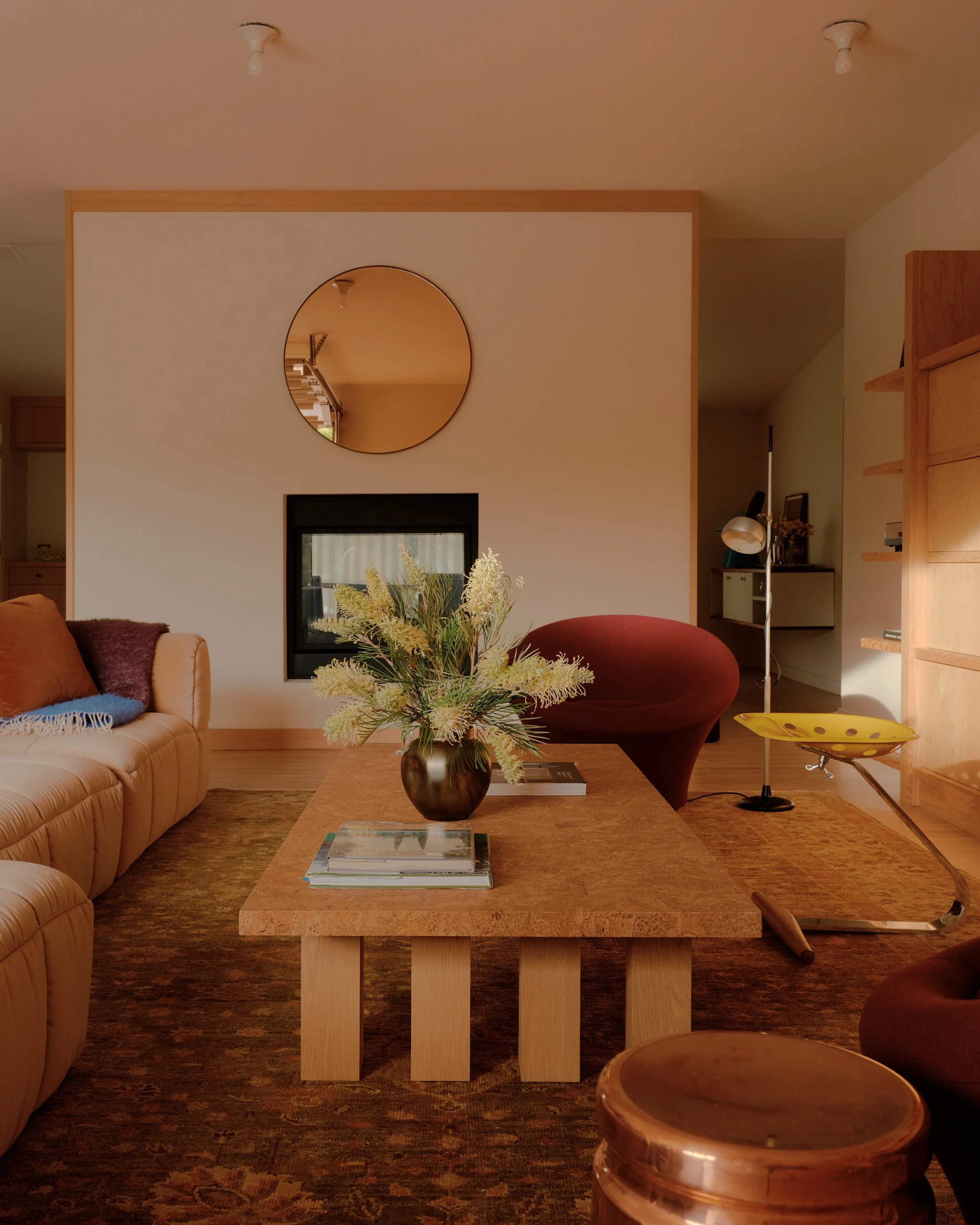
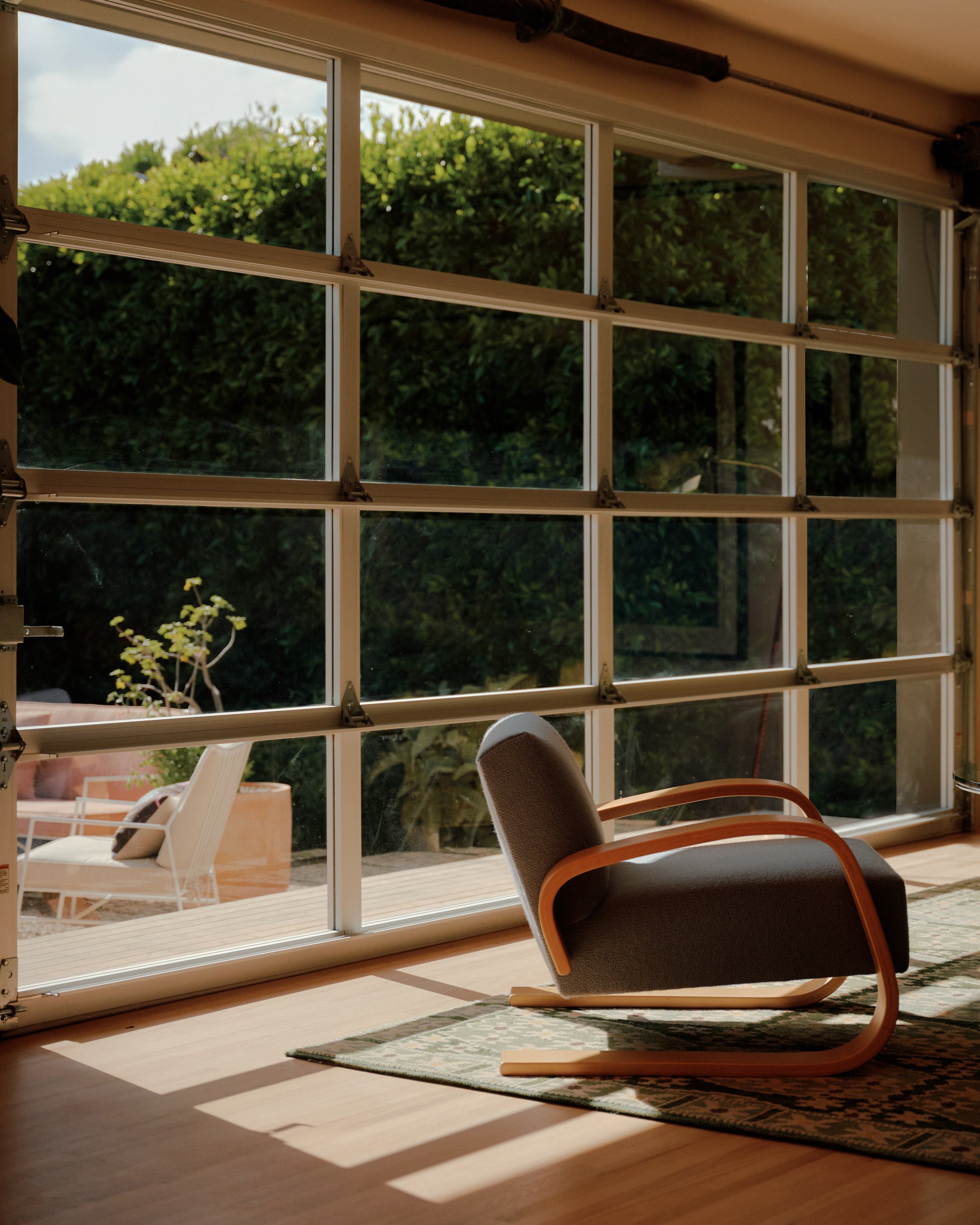
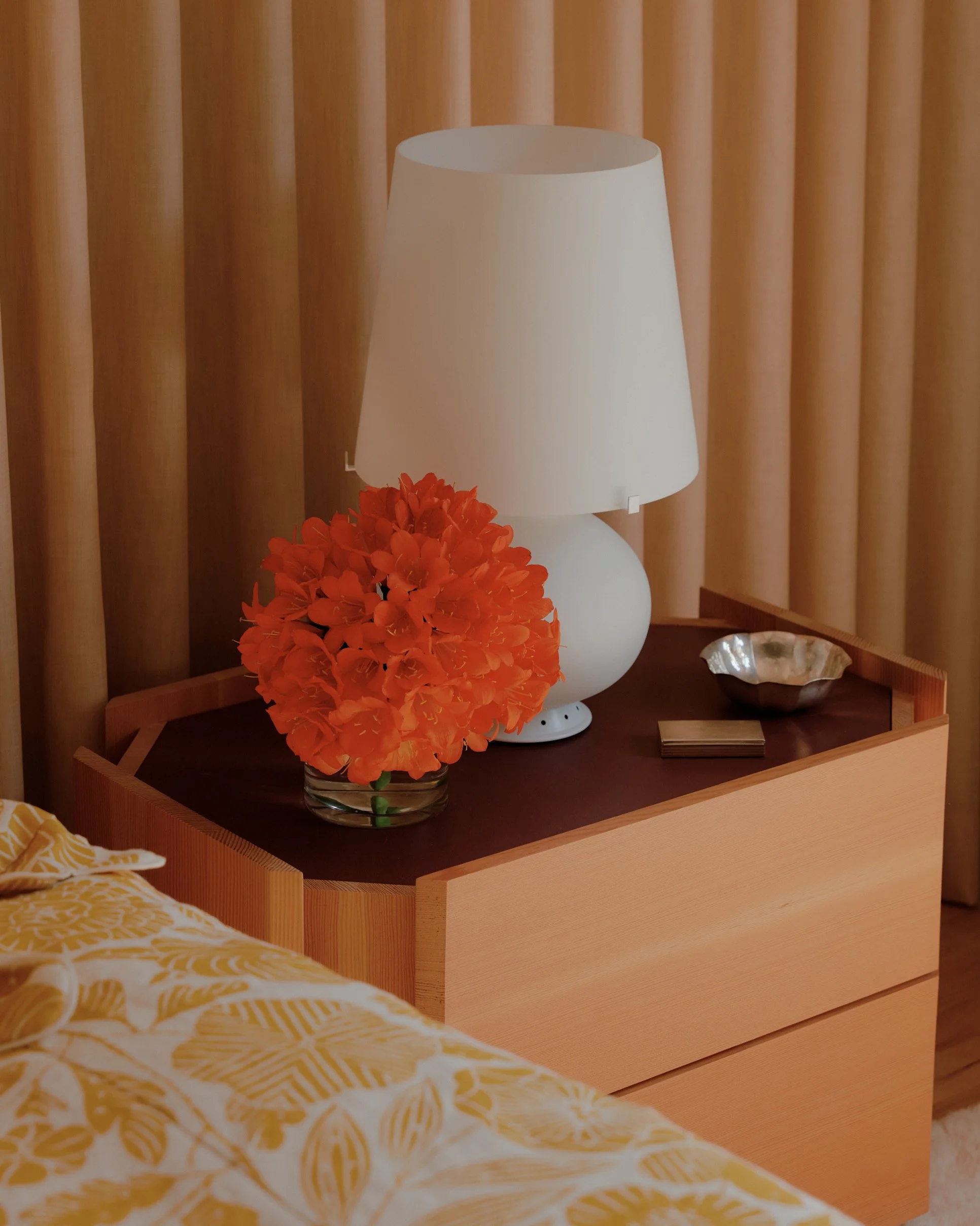
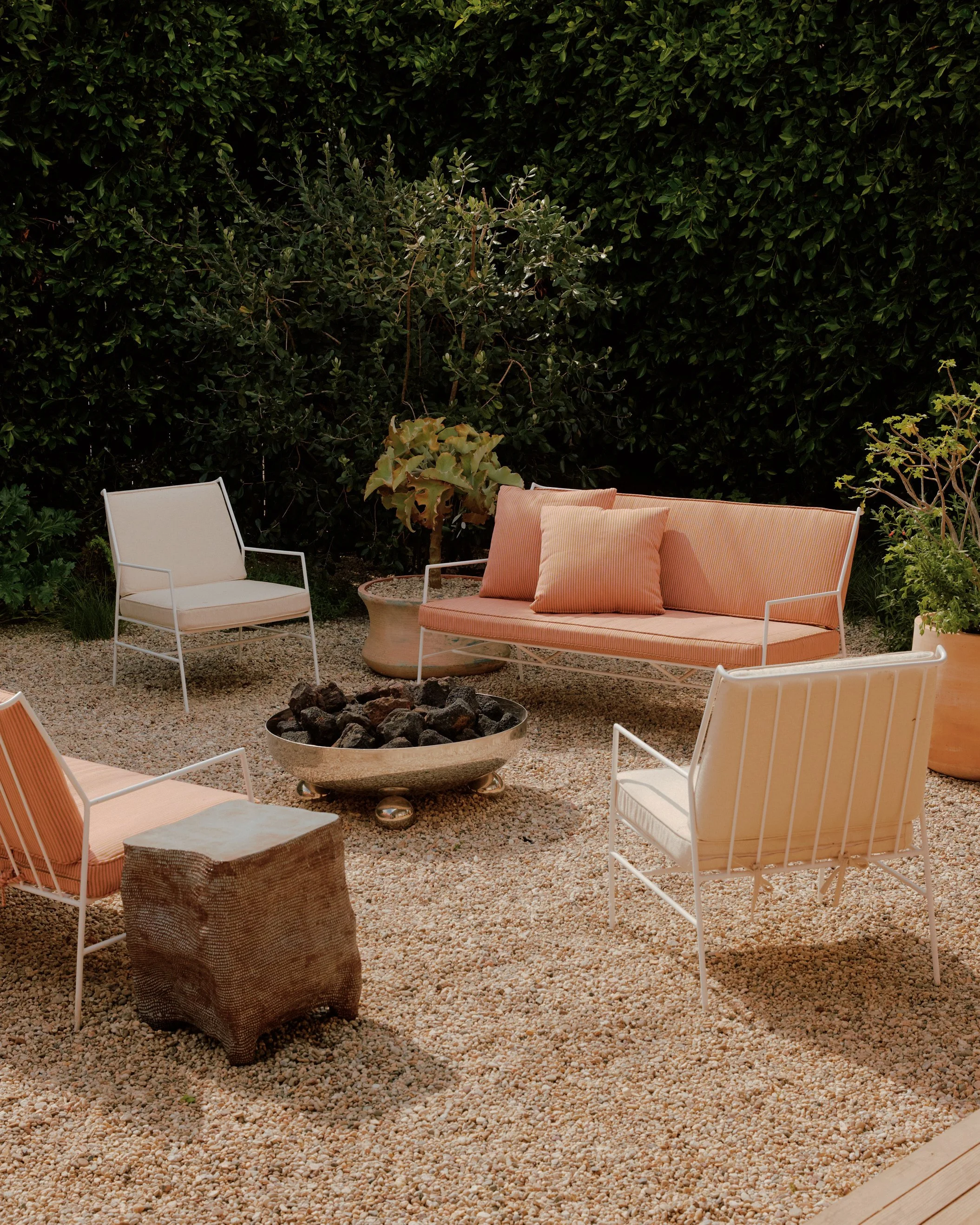
The design language reflects this duality. Spaces evoke the curated energy of a high-fashion boutique while retaining the warmth and comfort of a lived-in home. Materials and textures such as plywood, solid wood, beech, walnut, recycled plastics are elevated through craft and juxtaposition. One of the project’s defining interventions, the installation of operable garage doors in the main living spaces, dissolves boundaries entirely. Here, the quintessential Los Angeles lifestyle comes alive, with gatherings spilling seamlessly from interior to exterior, blurring the line between home and horizon.